Nasal Congestion and Sinusitis Problems
Nasal congestion is usually caused by structural or inflammatory issues that narrow or block the nasal passages, leading to difficulty breathing. Sinusitis, on the other hand, is the inflammation of the sinuses, which causes nasal congestion, headaches, and a feeling of pressure in the facial area. Both conditions can be treated with medical treatment or, if necessary, surgical methods.
Take the First Step Now
For more information, contact us
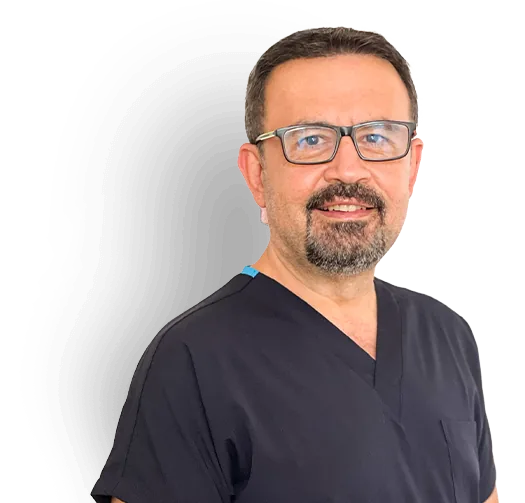
Schedule your appointment or online consultation with Prof. Dr. Mustafa Deniz Yılmaz now. Take the first step in your treatment process and let’s begin your journey to recovery together with personalized solutions.
Deviated Nasal Septum and Nasal Turbinates
One of the main causes of nasal congestion, known as a deviated nasal septum, is a condition that can easily be corrected with surgery. Often, swelling of the structures inside the nose, known as turbinates, occurs alongside this issue. During surgery, these turbinates must also be reduced in size.
Nasal Turbinate Hypertrophy
There are structures in both nostrils that regulate the amount, temperature, and humidity of the air entering the nose by expanding and contracting. When these turbinates remain enlarged, they are one of the significant causes of nasal congestion. This condition is especially common in cases of nasal allergies. Treatment involves techniques like radiofrequency, microdebridement, or surgical methods to reduce the size of the turbinate without damaging its outer part.
Acute Sinusitis
Acute sinusitis is an inflammation of the nose and the mucous membrane lining the sinuses caused by various viruses and bacteria. During this inflammation, the mucosa swells, which can block the sinus openings. As a result, the sinuses fill with inflamed mucus. This condition leads to severe pain in the face, fever, and nasal congestion. Antibiotics and anti-inflammatory medications are used in its treatment. If the condition lasts longer than three months, it is referred to as chronic sinusitis.

Nasal Polyps
Chronic sinusitis, allergies, and chronic rhinitis are some inflammatory conditions that can lead to the growth of tissue in the nose and sinuses, resulting in the formation of polyps. In patients with genetic predisposition, polyps can fill the nasal passages completely, making it impossible for the patient to breathe through the nose. Treatment is usually surgical. These patients undergo endoscopic sinus surgery.


Endoscopic Sinus Surgery
In cases of sinusitis and polyps (nasal tissue growth) that do not improve with long-term medication, an endoscopic system is used to access the sinuses through the nostrils. The sinus cavities are cleaned, and the openings are enlarged. This procedure is called endoscopic sinus surgery. Different techniques are applied depending on the sinus that needs to be treated. Patients are typically discharged from the hospital on the same day or the next day.

Nasal Allergy
Rhinits is the inflammation of the mucous membrane that lines the inside of the nose. When this inflammation is caused by allergic factors, it is referred to as allergic rhinitis.
It is typically characterized by severe nasal congestion, intermittent sneezing attacks (at least 3-4 times), eye watering, and itching in the nose. Treatment includes avoiding allergens, using medication, and, if necessary, surgery to reduce the size of the turbinates (nasal polyps).

What can I do to protect myself from allergies?
- Reduce the number of carpets and rugs in your home, and have someone who will frequently clean with a vacuum cleaner, other than the allergic person. A vacuum with an allergen filter is the best option.
- Do not lay rugs on concrete floors; dust mites can accumulate.
- Use synthetic polyester pillows instead of feather pillows.
- Cover mattresses with plastic covers.
- Frequently use air conditioners and dehumidifiers; dust mites thrive in warm, humid environments.
- Another common cause of allergies is pet dander. Follow these steps:
- Get a pet that sheds less dander.
- Keep pets outside the house as much as possible.
- Wash your hands after touching the pet.
- Find someone (who is not allergic) to bathe your dog once a week. However, ask whether bathing your dog weekly could damage its skin.
- Find someone (who is not allergic) to bathe your cat every week with a special solution that removes saliva from the fur.
- Molds are another common indoor allergen. Like dust mites, they grow in warm, humid environments. To minimize exposure to indoor mold:
- Use dehumidifiers and air conditioners when the air is warm and humid.
- Avoid areas in your home that are prone to mold; stay away from old paper products, old books, newspapers, or magazines, humidifiers, houseplants, and aquariums.
- Find someone (who is not allergic) to clean and remove dust from these items.
- Pollen and mold are common outdoor allergens, especially from early spring to mid-fall. To reduce exposure to outdoor allergens:
- Minimize activities such as lawn mowing or leaf raking.
- Avoid being outside on days with high pollen or mold levels.
- Close windows on days with high pollen or mold levels (and use the air conditioner in hot weather).
Terfenadine and astemizole can cause heart rhythm abnormalities in people with severe liver disease or those taking certain antibiotics or antifungal medications. Other potential side effects include narrowing of the airways and wheezing, which can resemble asthma symptoms.
Your doctor may also prescribe non-prescription nasal sprays. Decongestant nasal sprays can provide relief for a few days, but using them for more than 4-5 days may cause a rebound effect (worsening of symptoms). Other nasal drops contain sodium cromoglycate, which prevents the release of irritants called histamines from mast cells. These drops may also contain ipratropium, which blocks a natural substance called acetylcholine, important in mucus production. As a result, your doctor may prescribe nasal sprays containing low doses of corticosteroids.
This spray can stop an allergy attack, but it may take more than a week to reach maximum effectiveness. If antihistamines, nasal sprays, and environmental controls do not work, or if the medications cause side effects, you may consider immunotherapy. For immunotherapy to be effective, your doctor must identify the allergen causing the symptoms. Initially, small amounts of allergens are injected under the skin. The dose is gradually increased, typically on a weekly basis, and the treatment may last for years.
Allergens most responsive to immunotherapy include ragweed, grass, house dust mites, and cat dander. Symptoms usually improve within 6 months, but doctors may recommend treatment lasting 4-5 years. However, immunotherapy may not always be effective.

* “Thanks to my doctor's care and experience, I had a very smooth process. My rhinoplasty result turned out exactly as I wanted.” * “I achieved a natural and aesthetic result. Thank you for the care, attention, and friendly service.”
I cannot thank Professor Mustafa Deniz enough for quickly resolving my problem. For three months, I had seen countless ENT doctors, and I suffered from an extreme sore throat. Three times, my surgery in another department was postponed due to my sore throat and difficulty swallowing. When my sore throat became severe, I would go to the emergency room out of desperation. Even though they gave me painkillers for temporary relief, the problem persisted for days afterward. Not being able to have surgery, the difficulty swallowing, and the sore throat had completely exhausted me. After a day of intense pain, I decided that things wouldn't be like this anymore. After researching online, I'm so glad I went to Professor Mustafa. I'm so glad I avoided going to so many different ENT doctors and failing to find a solution. May God bless him; I highly recommend him to anyone seeking a solution like me.
I'm so glad I met Dr. Mustafa Deniz Yılmaz; my vertigo attacks ended thanks to his treatment. Thank you, esteemed doctor.
Our doctor's friendly and warm approach put us at ease before the examination; he was practical and solution-oriented, and we recovered quickly. Thank you to him.
I would like to thank my teacher Mustafa very much. He cured me of my vertigo, which I had been struggling with for years, in just 3 months. Thank you again for your efforts.
I spent two years going from hospital to hospital but couldn't find a solution. I found healing here. Thank you very much, doctor.
Last August, I went to see my doctor for pressure in my ears and dizziness. After a series of tests, I was diagnosed with vestibular migraine. After using the prescribed medication, my symptoms decreased by 99%. I cannot thank Dr. Mustafa and his team enough. Furthermore, their prompt responses to my questions via WhatsApp during this period are proof of how seriously they take their work. I wholeheartedly recommend them to everyone.
Hello, I went to see Dr. Deniz three months ago because of my vertigo, and I'm so glad I did. I'd been to so many doctors before, but they couldn't diagnose me. I tried various medications, but nothing helped. I was going to the emergency room every two days for IV fluids. While researching on Google, I found out Dr. Deniz had a clinic specializing in vertigo, and based on the reviews, I made an appointment and went. He diagnosed me with vestibular vertigo, and I've been taking medication for three months now. Thank God, I'm feeling much better. May God bless Dr. Deniz and his team. Thank you.
My wife had chronic allergies that caused swelling in her nasal passages and difficulty breathing. She coughed a lot because she couldn't breathe properly. We did a lot of research and heard that Dr. Mustafa was experienced in this field. Thankfully, her breathing improved and her cough disappeared after the turbinate surgery. You can definitely choose him. We are so glad we chose you, Doctor. Thank you for your expertise and hard work.
We met Dr. Deniz because of my mother's vertigo attacks. Her vertigo had become chronic; for two years, she had been experiencing prolonged attacks almost every two months, accompanied by persistent balance problems, making her life difficult. Dr. Deniz and his team first identified the underlying cause and trigger of the vertigo and began treatment accordingly. For the first time, the vertigo attack lasted this short, and the balance problems that had persisted for two years completely disappeared. Dr. Deniz is already excellent at his job, but his audiologist colleagues are also among the best in their field. If you have a complaint like vertigo, you can confidently entrust yourself to Dr. Deniz and his team.
I have been living with Meniere's disease for 2 years. I experience buzzing and ringing in my right ear, dizziness, and hearing loss... I previously consulted two professors. Both gave the same diagnosis. They said there is no cure for this disease and that I have to live with it. Through a friend, I met Professor Deniz. He said the opposite, that the attacks of this disease can be slowed down or stopped. He performed a series of tests in his clinic and started medication. My treatment has been ongoing for 3.5 months, and my attacks have decreased. I no longer constantly feel dizzy. I thank him and his team very much 😇 I wish everyone healthy days.

Anesthesia Type: General

Operation Time: 2-3 Hours

Pain: Mild

Length of hospital stay: 1 night

Recovery Time 7 days
Fill in the Form
Let us call you
Take the First Step Now
For more information, contact us
Schedule your appointment or online consultation with Prof. Dr. Mustafa Deniz Yılmaz now. Take the first step in your treatment process and let’s begin your journey to recovery together with personalized solutions.


